

Rocket Lab In The News


Viasat has selected Rocket Lab to build a geostationary satellite bus for the U.S. Space Force’s Protected Tactical SATCOM-Global
PTS-G is being developed around a new generation of smaller, highly maneuverable geostationary satellites intended to provide secure and resilient communications to U.S. military forces around the world.
Viasat received its initial PTS-G contract in May and has now selected Rocket Lab to provide a geostationary version of its Lightning spacecraft platform. The satellite will carry Viasat’s dual-band X- and Ka-band communications payload and is being designed with enhanced anti-jamming capabilities. Unlike traditional large GEO communications satellites, the PTS-G architecture is intended to use smaller spacecraft that can be manufactured and deployed more rapidly while also having greater ability to maneuver in orbit. Rocket Lab’s spacecraft will incorporate many of the company’s own components, including radios, solar-power systems, star trackers, reaction wheels and flight software.
Rocket Lab was also selected by the U.S. Space Force for work on its Space Data Network, receiving two delivery orders with a combined value of approximately $12 million. The work focuses on high-speed, low-latency optical — or laser — communications between satellites and ground systems.
The Space Data Network is intended to create a secure, high-capacity communications backbone capable of quickly moving military data around the globe. Rocket Lab will design, test and demonstrate technologies needed to make different optical communications systems work together. The company also plans to conduct an in-orbit demonstration in 2027 using a Rocket Lab-built Photon spacecraft equipped with optical communications and networking hardware. The technology could eventually allow military satellites to move large amounts of information between spacecraft using laser links rather than relying entirely on traditional radio communications.
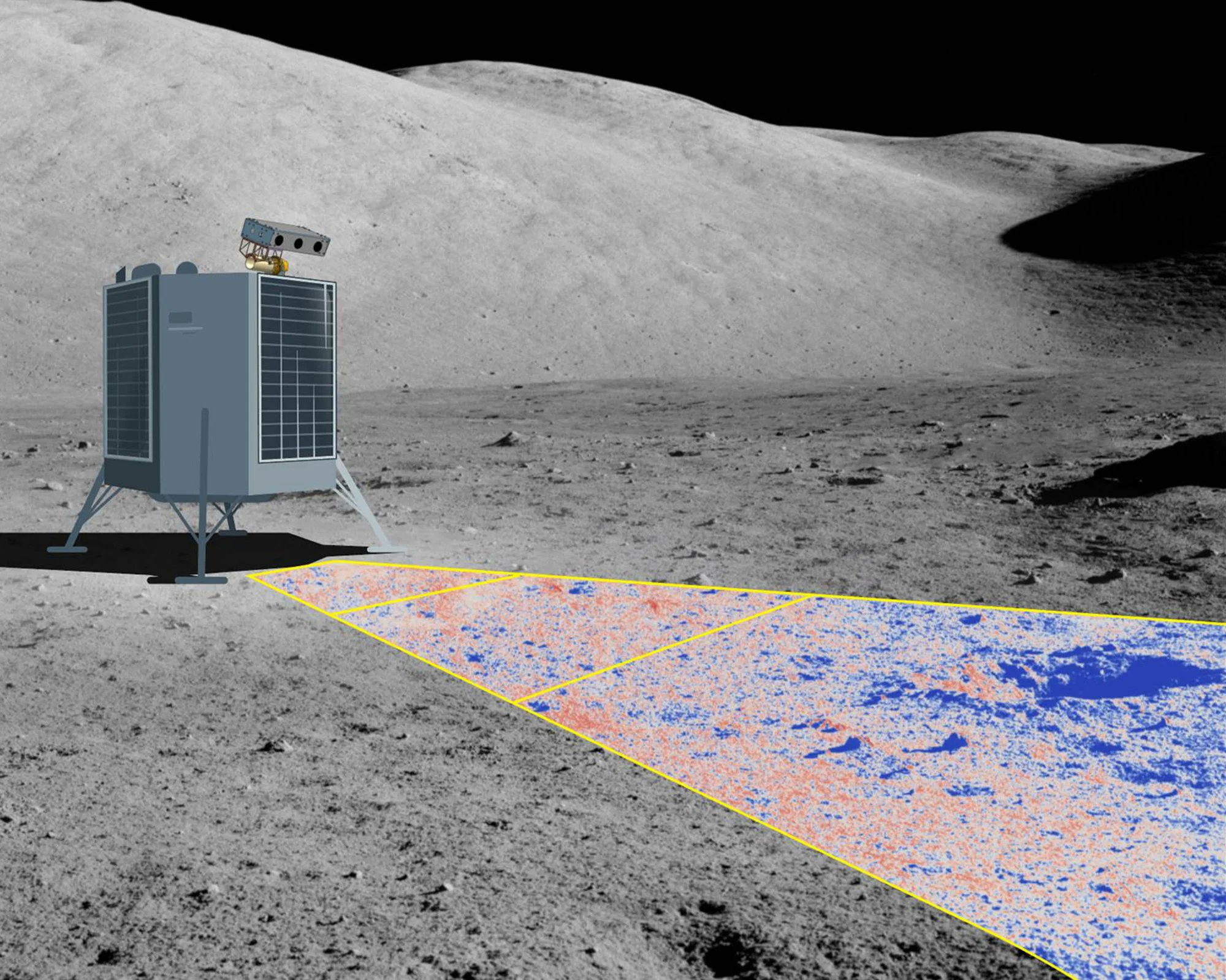
Rocket Lab’s growing space-systems business is also heading back to the Moon. Rocket Lab Robotics will support the University of Arizona’s EMILIA-3D lunar science instrument by providing a precision single-axis scanning gimbal.
EMILIA-3D, short for Emission Imager for Lunar Infrared Analysis in 3 Dimensions, will combine a thermal infrared camera with a pair of visible-light stereo cameras. Mounted on Rocket Lab’s gimbal, the cameras will repeatedly scan the lunar terrain from near the lander out toward the horizon. Scientists will combine those observations to build detailed three-dimensional thermal models of the lunar surface, helping researchers better understand lunar soil, surface roughness, temperature changes and how heat moves through the regolith.
The instrument is expected to operate for approximately one lunar day, or about two Earth weeks. Rocket Lab’s robotics division was formerly Motiv Space Systems, which Rocket Lab acquired earlier this year. Motiv’s hardware has previously supported major planetary missions, including NASA’s Perseverance Mars rover, giving the newly formed Rocket Lab Robotics division considerable experience building mechanisms designed to survive extreme environments.
And rounding things out for Rocket Lab, the company successfully launched its latest Electron mission, “The Lightning God Defends,” for longtime customer iQPS.
Electron lifted off from Rocket Lab’s Launch Complex 1 in New Zealand and deployed SUSANOO-II, also known as QPS-SAR-18, into a 575-kilometer circular low-Earth orbit. The spacecraft is the latest addition to iQPS’s growing constellation of synthetic-aperture-radar, or SAR, Earth-observation satellites.
Unlike conventional optical imaging satellites, SAR spacecraft use radar to image the Earth, allowing them to collect detailed observations at night and through clouds and poor weather. The completed mission marked the ninth QPS-SAR satellite deployed by Rocket Lab for iQPS, with all nine missions successful. It was also Rocket Lab’s 14th Electron launch of 2026 and its 93rd Electron mission overall. iQPS currently has another nine dedicated Electron launches booked as it continues building out its radar-imaging constellation through the end of the decade.
0 Comments