

Rocket Lab Challenges NASA’s Mars Communications Award to Blue Origin


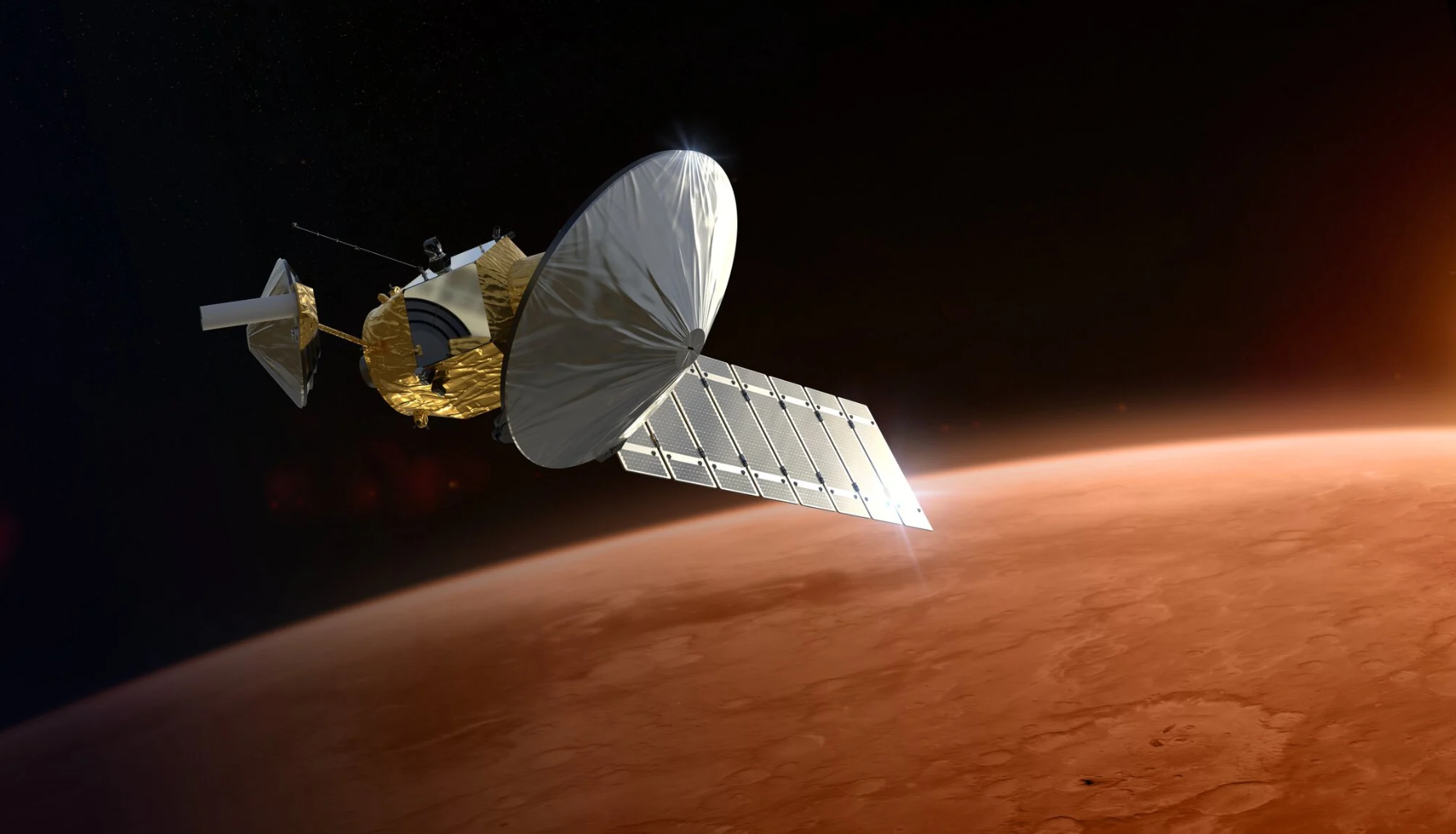
Rocket Lab has formally challenged NASA’s decision to award Blue Origin a contract worth up to $700 million to develop the agency’s next-generation Mars Telecommunications Network, opening a federal review of one of NASA’s most important new pieces of Mars infrastructure.
Rocket Lab filed its protest with the U.S. Government Accountability Office (GAO) on September 11, ten days after NASA announced Blue Origin as the winner. The company argues that NASA’s selection may not comply with eligibility requirements established by Congress and also disputes NASA’s technical evaluation of Rocket Lab’s proposal.
Rocket Lab Questions NASA’s Selection Process
In announcing its protest, Rocket Lab said NASA’s award decision appeared inconsistent with congressionally mandated eligibility criteria. The company also characterized NASA’s review of its technical proposal as “punitive,” alleging that the evaluation contained incorrect assertions and conclusions.
The protest does not establish that NASA acted improperly. Those are Rocket Lab’s allegations, and the GAO will now determine whether NASA followed federal procurement law and the rules established for the competition.
The eligibility question could become a particularly important part of the dispute because Congress did more than simply provide money for the spacecraft.
Legislation approved in 2025 appropriated $700 million for a competitively bid, firm-fixed-price Mars telecommunications orbiter. It specified that the spacecraft must be selected from commercial proposals whose companies had received NASA funding during fiscal years 2024 or 2025 for Mars Sample Return commercial design studies and had proposed a
separate, independently launched Mars telecommunications orbiter supporting an end-to-end sample-return mission.
Both Rocket Lab and Blue Origin were among companies NASA selected to perform commercial Mars Sample Return studies.
What remains at issue is how NASA determined that the winning proposal satisfied the requirements and how the agency evaluated the competing technical approaches.
Blue Origin Selected for Mars Communications Network
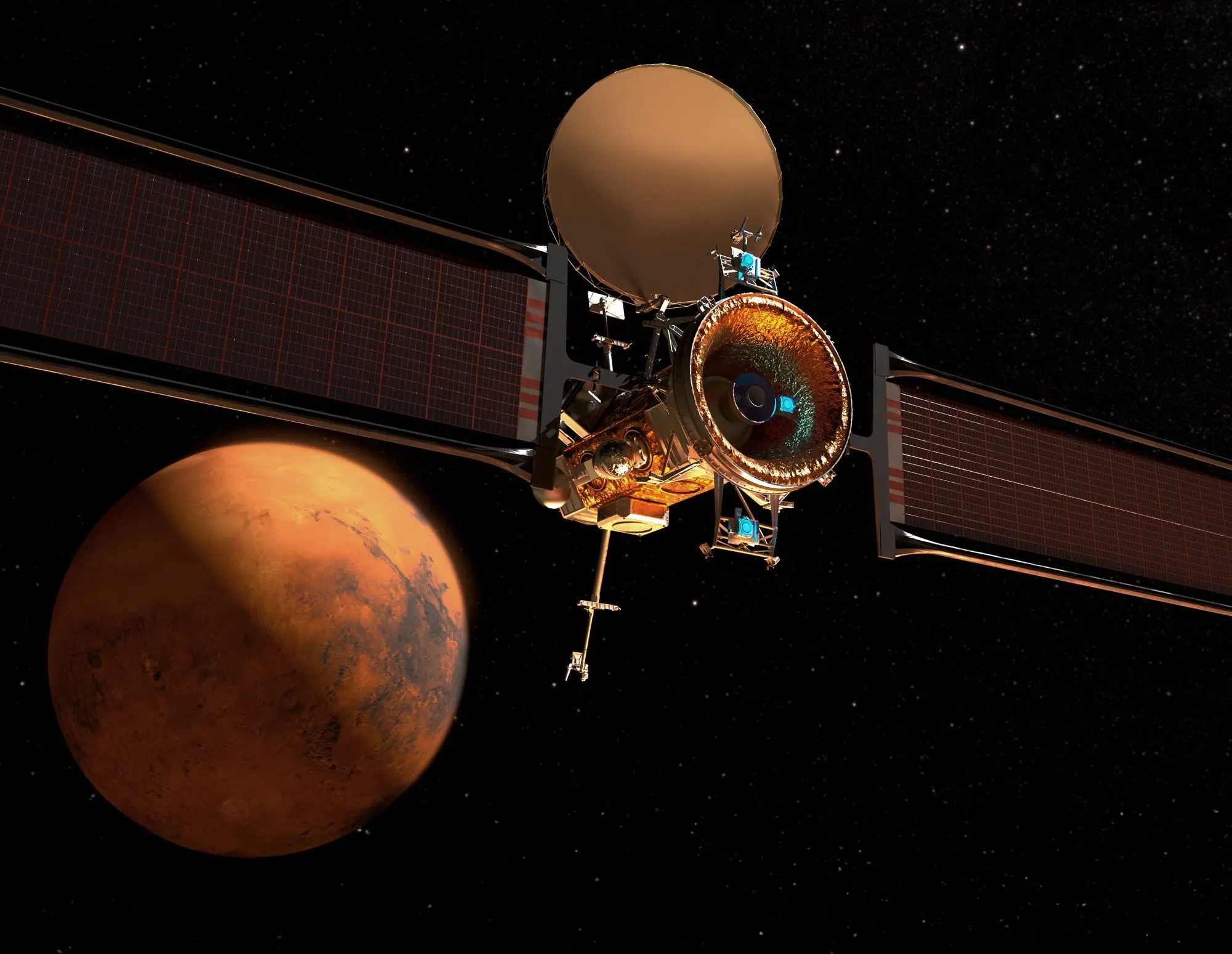
NASA announced on September 1 that Blue Origin had been selected to design, develop, integrate, launch and operate the Mars Telecommunications Network.
The firm-fixed-price contract carries a maximum potential value of approximately $700 million, with the telecommunications spacecraft required to be delivered to NASA no later than December 31, 2028. NASA expects the network to become operational at Mars by 2030.
The spacecraft would provide a dedicated high-capacity communications link between Mars and Earth, relaying science data, imagery, navigation information and mission communications for spacecraft operating both on the surface and in orbit.
Blue Origin plans to base its Mars Telecommunications Orbiter on the company’s Blue Ring spacecraft platform. The company says the design combines solar-electric and chemical propulsion and is capable of providing high-rate communications while also supporting additional payloads and future Mars infrastructure.
Rocket Lab Had Its Own Mars Orbiter Proposal
Rocket Lab aggressively pursued the same contract with a Mars Telecommunications Orbiter based on its vertically integrated spacecraft technology.
The company points to considerable Mars heritage across its spacecraft systems and components. Rocket Lab also designed and manufactured the twin spacecraft for NASA’s ESCAPADE Mars mission and says its telecommunications concept was designed specifically around NASA’s need for a dedicated Mars relay.
Rocket Lab argues that a purpose-built communications orbiter is becoming increasingly important as NASA prepares for a new generation of robotic missions and, eventually, human exploration.
Mars surface spacecraft generally rely heavily on orbiters to relay large amounts of data to Earth rather than communicating directly with Earth at high data rates. NASA’s new network is intended to provide significantly greater capacity and reliability for missions operating around the Red Planet.

What Happens Next?
A GAO bid protest is a formal federal procurement review rather than a lawsuit deciding which spacecraft design is technically superior.
GAO examines whether the government agency followed applicable procurement laws, regulations and the evaluation criteria established for the competition. A protest can ultimately be dismissed, denied or sustained, and an agency can also take corrective action before GAO reaches a final decision.
GAO is required to resolve bid protests within 100 calendar days, although many cases conclude sooner. Depending on when a protest is filed and other procedural requirements, federal law can also temporarily pause contract performance while the challenge is considered. Whether such a stay is currently affecting the Blue Origin Mars contract has not yet been publicly confirmed.
For the moment, Blue Origin remains NASA’s announced contractor, and there has been no GAO ruling overturning the award.
Rocket Lab’s challenge, however, means the competition for NASA’s next Mars communications spacecraft may not be over yet.
The outcome could determine not only which company builds the spacecraft but also who provides a communications backbone expected to support Mars exploration for years to come.
0 Comments