

Dragonfly Mission Summary, Analysis and Status Update


Dragonfly: Flying on Titan - A Current Status Report
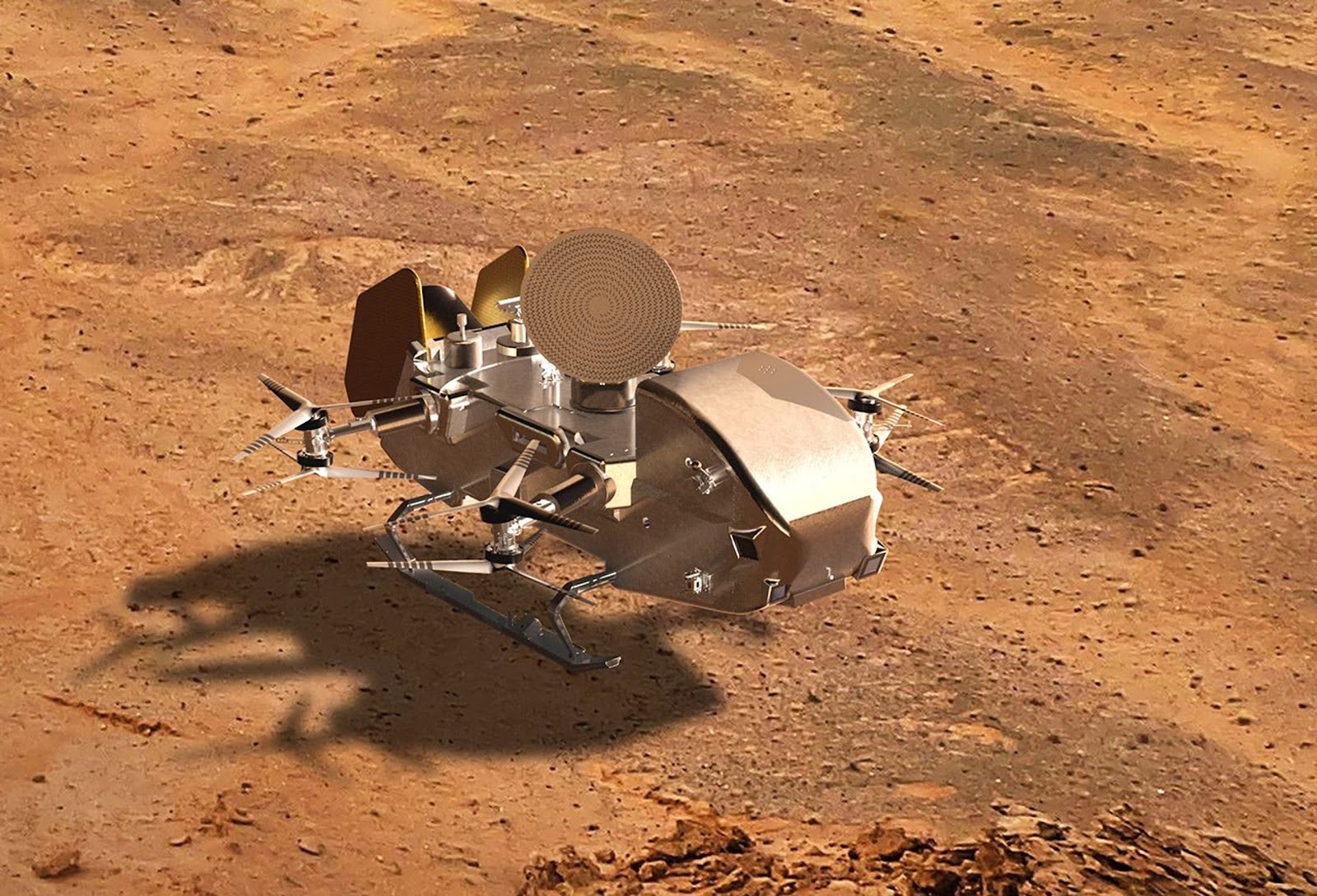
Dragonfly, NASA’s latest New Frontiers–class mission, represents a transformative approach to planetary exploration. Following in the footsteps of Ingenuity, the Mars helicopter that achieved the first powered, controlled flight on another planet, Dragonfly is a nuclear-powered, car size octocopter, similar in style to small commercial drones, designed to explore Saturn’s moon Titan. Proposed in 2017 and selected in 2019, the program has already achieved critical design reviews and testing, but questions remain regarding its long-term outlook amid recent transitions in the U.S. Government and NASA leadership, as well as proposed budget reductions affecting science programs.
The idea of exploring Titan with an aerial vehicle has been studied before by NASA. The 2007 Titan Explorer Flagship Mission Study explored the idea of using a Montgolfier balloon to travel around Titan, and the AVIATR (Aerial Vehicle for In Situ and Airborne Titan Reconnaissance) study proposed using an unmanned plane. Jason Barnes of the University of Idaho (who also worked on AVIATR) and Ralph Lorenz of the Johns Hopkins University Applied Physics Laboratory (APL) came together to create the idea of a radioisotope thermoelectric generator (RTG) powered rotorcraft to fly on Titan. Elizabeth Tuttle, who had previously worked on Galileo, Cassini, the Lunar Reconnaissance Orbiter and Europa Clipper was selected as Principal Investigator. Dragonfly was selected as a finalist for the New Frontiers Mission 4 (following New Horizons, Juno, and OSIRIS-Rex) along with CAESAR, a comet sample return mission. In June of 2019 NASA awarded the mission to Dragonfly. Titan has long been a target of NASA as it is considered very similar to Earth’s own early formation. Its dense atmosphere and complex organic chemistry resemble conditions believed to have existed on early Earth. Studying Titan may therefore provide critical insights into the processes that led to the emergence of life on our own planet.
Dragonfly is described by NASA to be about the size of a car or small SUV. With the rotors it is 3.85m (12.5 ft) in length and width and 2.4m (8 ft) tall on its landing skids with the antenna deployed. It will weigh approximately 875 kg (1,900 pounds). Flight is enabled by eight rotors, each 1.35m (53 inches) in diameter. These are arranged in a similar configuration to quadcopter drones, but with two rotors per motor. This redundant design allows Dragonfly to continue the mission even if a rotor or motor is lost. The motors will be powered by a lithium-ion battery that is charged by the RTG during the Titan nighttime. This battery will allow Dragonfly to travel up to 16km (10 miles) per charge at an altitude up to approximately 4km (2.5m). As communications between Earth and Titan experience a delay of 70-90 minutes each direction, the flights will be autonomous and not controlled live. Dragonfly’s scientific payload includes a Mass Spectrometer to analyze soil and atmospheric samples, along with Gamma-Ray and Neutron Spectrometers. Dragonfly will also be carrying meteorological and seismic sensors along with multiple cameras. The cameras will be used for scientific analysis, scouting landing sites, and supporting autonomous landing operations.
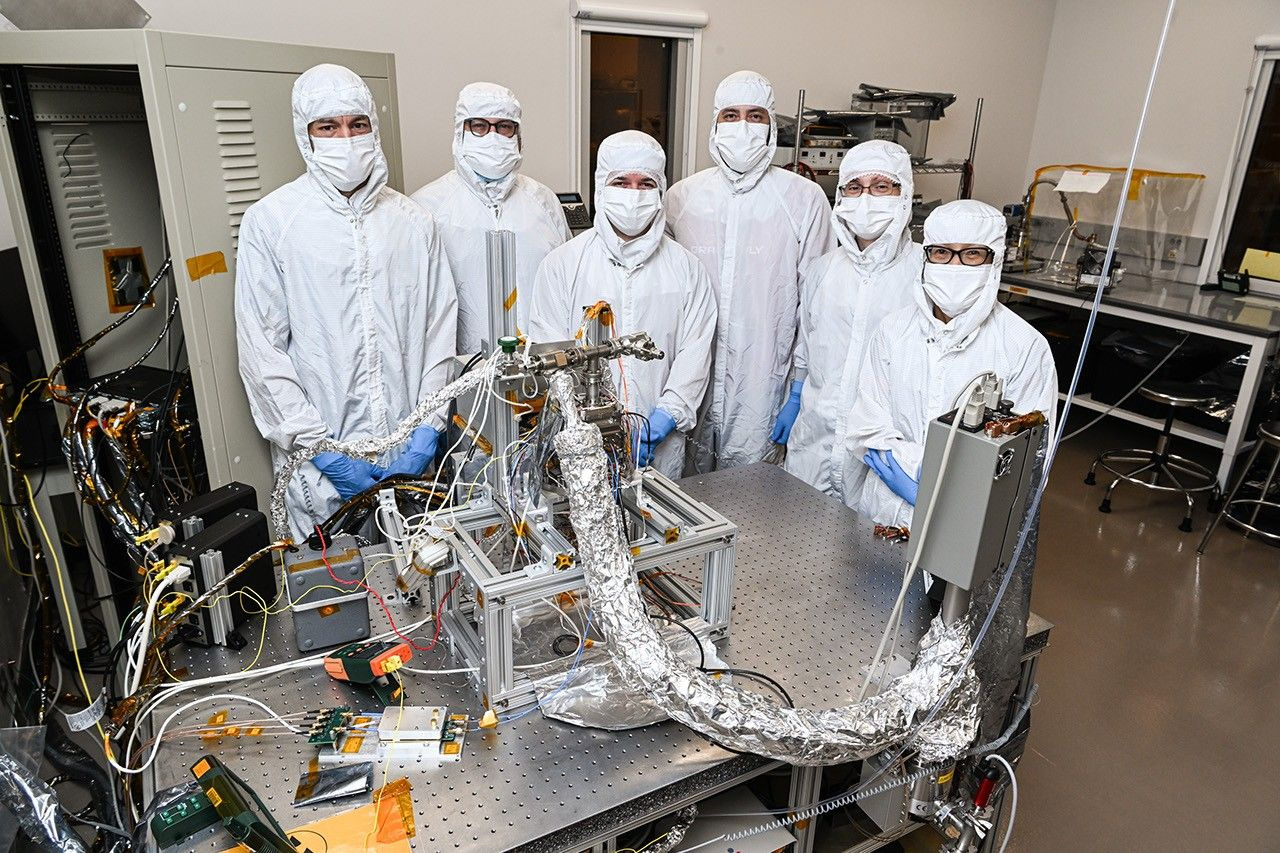
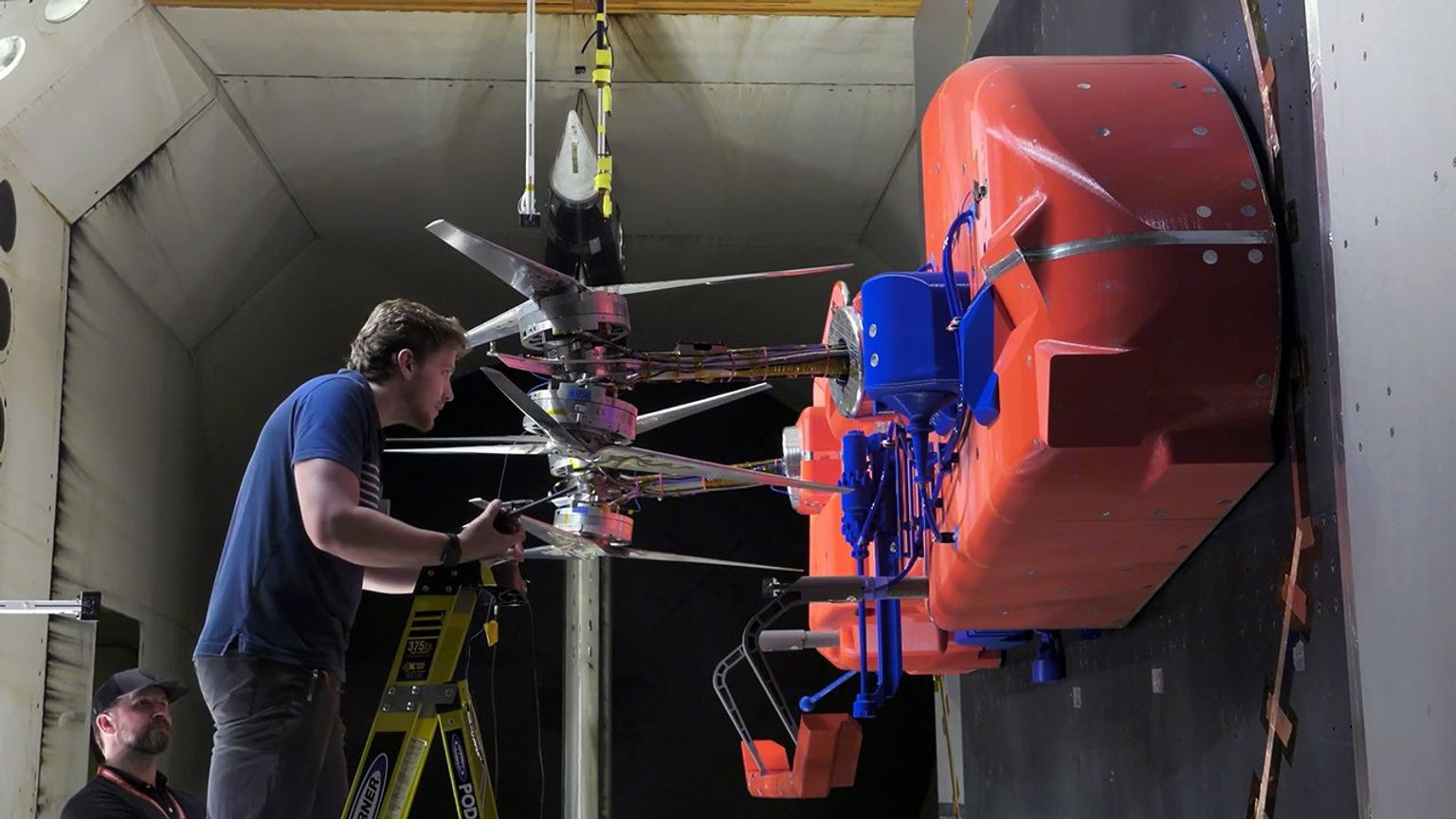
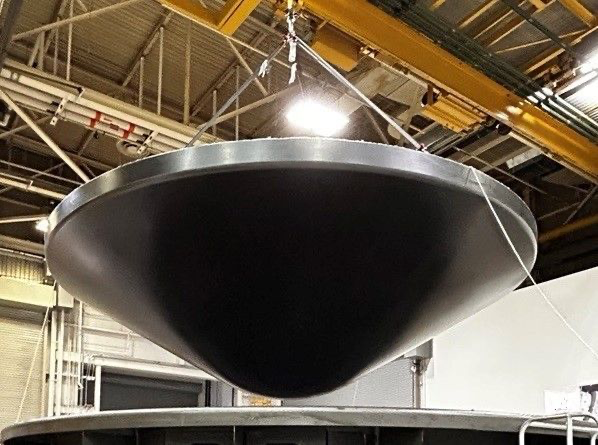
Originally scheduled to launch in June of 2027 the mission was delayed to July 2028 in 2023 due to funding uncertainties. New Frontiers missions normally are planned at a US$1 billion cap (including launch services) but Dragonfly, following delays and supply chain issues caused by the COVID-19 pandemic saw projections exceed US$3 Billion. On November 25th, 2024 NASA announced that it had awarded the launch service contract to SpaceX to launch Dragonfly on a Falcon Heavy rocket. In April 2025, Dragonfly passed the critical design review phase which allowed APL to begin construction and testing of the production probe. In September 2025 NASA provided updates on testing of the full scale rotors in atmospheric wind tunnel facilities at the Langley Research Center. The Mass Spectrometer package was also completed and is being prepared for environmental testing. Testing of the foam insulation, critical for maintaining operations at approximately -179 C (-290 F) degree temperatures, has been progressing at the Titan laboratory at APL. The flight radios were also completed at this time, using the APL designed Frontier radios that have been used on New Horizons and the Parker Solar Probe. Lockheed Martin has also completed the fabrication of the aeroshell that will protect Dragonfly for its entry interface to Titan’s atmosphere. Integration is scheduled to begin in January 2026 at APL.
Scientific funding uncertainty intensified in 2025 as the incoming U.S. administration proposed significant reductions to NASA’s science budget. Government spending was a target of the incoming new administration and proposals were released that included cutting funding by as much as 50% on current NASA Scientific programs. In addition the leadership of NASA was uncertain as Jared Isaacman, the original nominee for NASA Administrator, had his nomination withdrawn after his approval by the Senate Commerce Committee. At the end of 2025 Jared Isaacman was then renominated for the position, quickly passed through his nomination process and was confirmed by the Senate. The January 5th 2026 Congressional Budget Minibus for NASA includes funding for Dragonfly, helping to secure its continuation. On January 6th Jared Isaacman expressed his support for Dragonfly by posting on X “I love Dragonfly. An autonomous 1,000-pound, radioisotope-powered octocopter flying for years in Titan's -290°F temperatures is exactly the kind of nearly impossible scientific mission that justifies NASA's existence.”
With its future supported by Congress and Administrator Isaacman, much more news is expected from NASA on Dragonfly in 2026 as APL begins integration and testing of the production vehicle. Avid Space will continue to provide updates as they become available on this exciting mission.
John Hopkins Applied Physics Laboratory. (2017, December 21). NASA Selects Johns Hopkins APL-Led Mission to Titan for Further Development. NASA selects Johns Hopkins APL-led mission to Titan for further development. https://web.archive.org/web/20180426185707/http://www.jhuapl.edu/newscenter/pressreleases/2017/171221.asp
Lorenz, R. (2020). Dragonfly : Defining environments for rotorcraft flight on Titan. Proceedings of the Vertical Flight Society 76th Annual Forum, 1–9. https://doi.org/10.4050/f-0076-2020-16301
Morton, E. (2025, April 24). NASA’s Dragonfly Passes Critical Design Review - NASA science. NASA. https://science.nasa.gov/blogs/dragonfly/2025/04/24/nasas-dragonfly-passes-critical-design-review/
0 Comments